021
Furniture
Sār
2026

Client
Category
Status
Photography
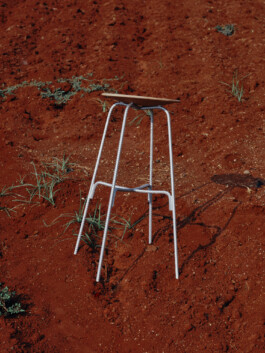
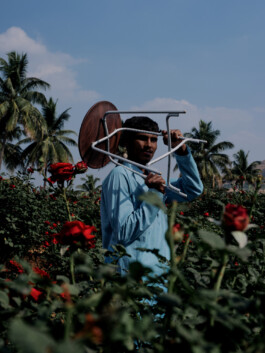
In a country building at an unprecedented scale, the narrative of progress often excludes the piles of industrial waste that remain. BLOOM by SĀR reimagines this residue, transforming the by-products of construction into new beginnings. Constructed using discarded steel reinforcement bars and leftover wood from SĀR’s own workshop, BLOOM proposes a pragmatic model for reuse. Even its making embraces what already exists: rebar rods, typically used to reinforce concrete, are bent using the same industrial machinery found on construction sites. The result is a family of stools, chairs, and tables that carry the memory of their origins—industrial, unrefined, and honest.
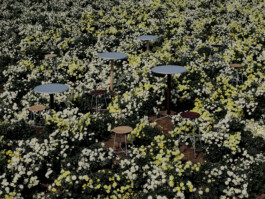
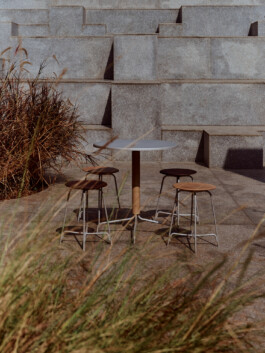
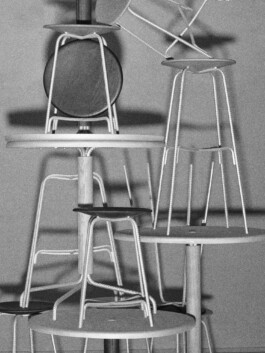
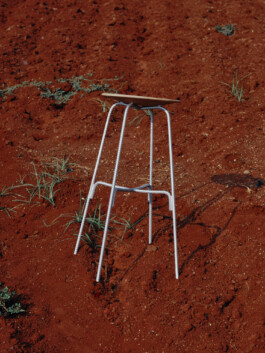
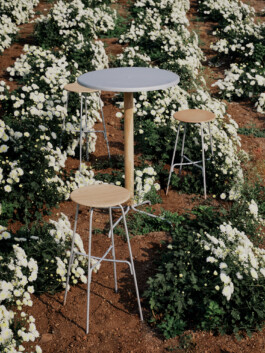
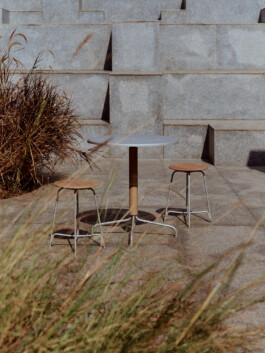
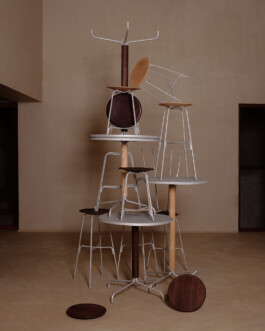
The collection’s aesthetic merges the architectural with the sculptural. The furniture reads as light, linear, and infrastructural—almost skeletal. Deceptively simple curves require precision and a nuanced understanding of the material’s tension and resilience. Exposed joints and the ribbed texture of the steel are retained, reimagined in tones of silver and aluminium that bring new life. The wooden seats and tabletops—crafted from remnants of ash, teak, or rubber wood—introduce warmth and tactility. Together, they create a dialogue between raw structure and refined surface.
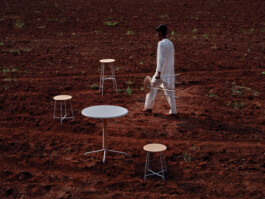
The collection includes stools in three heights, versatile chairs and armchairs, and two tables suitable for indoor and outdoor use: designed for flat pack such that one simply needs to screw it together. Its proportions and material resilience recall the easy informality of bistro furniture—adaptable, durable and refined in scale. BLOOM reflects a moment in India’s design evolution where sustainability can no longer remain a surface concern but must be embedded in process and production. “We often talk about sustainability as a distant ideal, or we fall into the trap of aestheticising it,” explains founder Nikita Bhate. “At SĀR, it begins with awareness—with acknowledging what we throw away and asking if it can be reimagined.”
In form, BLOOM reflects the geometry of construction; in spirit, it gestures toward renewal. Each piece is a quiet reminder that waste is not an endpoint but a beginning, and that design, when guided by awareness, can close the loop between making and unmaking.


021
2026

Client
Category
Status
Photography
In a country building at an unprecedented scale, the narrative of progress often excludes the piles of industrial waste that remain. BLOOM by SĀR reimagines this residue, transforming the by-products of construction into new beginnings. Constructed using discarded steel reinforcement bars and leftover wood from SĀR’s own workshop, BLOOM proposes a pragmatic model for reuse. Even its making embraces what already exists: rebar rods, typically used to reinforce concrete, are bent using the same industrial machinery found on construction sites. The result is a family of stools, chairs, and tables that carry the memory of their origins—industrial, unrefined, and honest.
The collection’s aesthetic merges the architectural with the sculptural. The furniture reads as light, linear, and infrastructural—almost skeletal. Deceptively simple curves require precision and a nuanced understanding of the material’s tension and resilience. Exposed joints and the ribbed texture of the steel are retained, reimagined in tones of silver and aluminium that bring new life. The wooden seats and tabletops—crafted from remnants of ash, teak, or rubber wood—introduce warmth and tactility. Together, they create a dialogue between raw structure and refined surface.
The collection includes stools in three heights, versatile chairs and armchairs, and two tables suitable for indoor and outdoor use: designed for flat pack such that one simply needs to screw it together. Its proportions and material resilience recall the easy informality of bistro furniture—adaptable, durable and refined in scale. BLOOM reflects a moment in India’s design evolution where sustainability can no longer remain a surface concern but must be embedded in process and production. “We often talk about sustainability as a distant ideal, or we fall into the trap of aestheticising it,” explains founder Nikita Bhate. “At SĀR, it begins with awareness—with acknowledging what we throw away and asking if it can be reimagined.”
In form, BLOOM reflects the geometry of construction; in spirit, it gestures toward renewal. Each piece is a quiet reminder that waste is not an endpoint but a beginning, and that design, when guided by awareness, can close the loop between making and unmaking.